Anyone who has sought diagnosis or treatment for a condition has relied on the work of physicians and scientists behind the scenes in a field they may never have heard of: pathology, or the study of the causes, development, and effects of disease. Pathologists analyze human tissue, cells, and body fluids, providing critical information to physicians and impacting nearly all aspects of patient care.
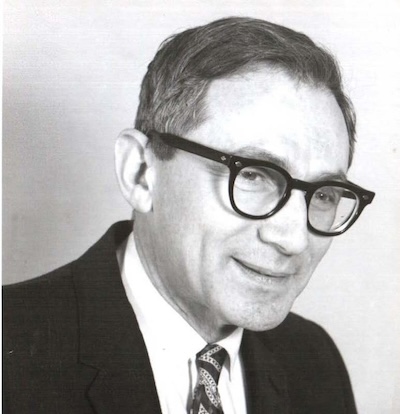
The Wolfe and Gita Churg Foundation, led by Andrew Churg, PhD’71, MD ’73, recently endowed the Jacob Churg Research Award Fund in UChicago Medicine’s Department of Pathology. The award provides junior faculty with funding to generate data and publish papers, necessary to compete for national awards at a period in their careers when it is often difficult to obtain grant funding. The endowment honors Jacob Churg, MD (1910-2005), a pioneer in the field of renal pathology, or the study of kidney disease.
One recipient of the research award, Andrea Olivas, MD, studies gastrointestinal and hepatic pathology, focusing on conditions such as inflammatory bowel diseases and celiac disease. After six years in a general surgery residency specializing in colorectal surgery she switched to pathology, studying diseases of the digestive system at a microscopic level. Because of her experience caring for patients with inflammatory bowel disease, she knew about challenges surgeons face.
One particular challenge occurs in a surgery commonly used to treat ulcerative colitis, where the large intestine is removed and the surgeon creates a new pouch to store waste from part of the small intestine. However, “pouch failure,” when it occurs, can cause serious health problems or even death. “One of my mentors in colorectal surgery at the University of Chicago approached me with this important clinical problem. This project was an opportunity for me to use both my surgical and pathology background to approach it in a new way,” said Dr. Olivas.
With the aid of the award, Dr. Olivas used histopathology—studying a disease by examining tissues under a microscope—coupled with a study of the underlying molecular mechanisms observed in tissue specimens from colectomy patients. This led to the identification of patterns that can help doctors identify patients most likely to experience pouch failure in the future. She is now exploring possible treatments to reduce risk and improve surgical outcomes for patients with ulcerative colitis and pouch complications.
Jacob Churg Research Awardee Anna Biernaka, MD, PhD, uses cytopathology, or examining cells under a microscope to find changes such as in size or shape, a technique commonly used to screen for cancer. Dr. Biernacka studied the cells of a rare, aggressive type of lung tumor called spindle cell carcinoid tumor. Even though the cells in this type of cancer do not show the usual indications of an aggressive cancer, she identified patterns in the tumor cells that provided an indication for how this type of cancer could spread. Identifying the unique features of these tumor cells could lead to insights for improved diagnosis and treatment.

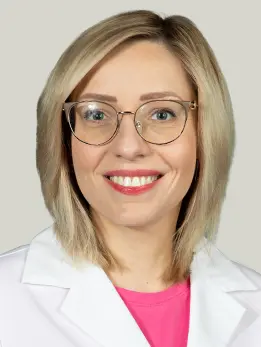
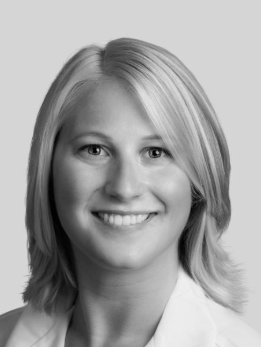
Angela Lager, PhD, became interested in pathology through her love of genetics. “I was fascinated to learn that there’s an entire medical field dedicated to studying chromosomes and DNA to understand the causes of genetic diseases and cancer. What drew me in and still keeps me motivated today is that clinical genomics feels like working on a complex puzzle. Each patient’s case presents a set of clues (and challenges), and when you find the right piece that explains their disease, it’s incredibly satisfying.”
At UChicago Medicine, she analyzes chromosomes and DNA from patients with suspected genetic disorders and cancers, helping to guide diagnosis and treatment. With the support of the Jacob Churg Award, she studied B-cell acute lymphoblastic leukemia (B-ALL), which represents 80 percent of all childhood leukemias and 20 percent of adult leukemias. “The genetic classification of B-ALL is essential because it guides treatment decisions, including whether a patient receives standard therapy or a more targeted, high-intensity regimen,” she said.
Physicians treating B-ALL face two challenges—first, that there are many different underlying genetic causes of the disease, and second, no single test gives a complete picture of those genetic drivers of the disease. Patients receive several separate tests, making diagnosis complex and labor intensive.
Dr. Lager investigated optical genome mapping (OGM), which generates a high-resolution map of a patient’s chromosomal changes. She hoped that using a single OGM test would allow a physician to detect key genetic alterations of an individual patient’s B-ALL. “Results from our pilot study of 26 patients show strong concordance between OGM and the current standard tests, and in some cases OGM has revealed hidden abnormalities that were missed by traditional methods,” Dr. Lager reported.
Her work has the potential to improve the way B-ALL is diagnosed and classified, helping ensure that patients are matched with the most appropriate therapies.“Our next steps are to bring optical genome mapping (OGM) in-house, validate it for clinical use, and offer it as a diagnostic test for patients with leukemia. The study has also opened the door to expanding OGM beyond leukemia, including its potential use in evaluating patients with inherited genetic disorders,” she said.
Daniel Arber, MD, Donald West and Mary Elizabeth King Chair of Pathology at the University of Chicago, notes that the award gives the Department of Pathology a huge advantage over our peer institutions by funding pathologists early in their careers. “The Churg family have a long history of medical excellence, including Dr. Jacob Churg, for whom the awards are named, as well as his son Dr. Andrew Churg, who is an internationally recognized expert in thoracic pathology,” he said. “Andrew Churg, who was a resident at the University of Chicago, is a long-time friend and supporter of our department. I cannot thank him and his family enough for this generous gift.”